Showing posts with label weather. Show all posts

Thursday, February 23, 2012

How to make spring come early

It's easy if you know how.  Just knit a warm and cozy hat that you really want to wear.

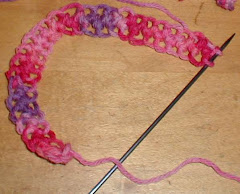
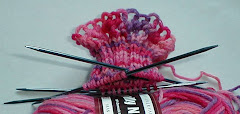
In January I found a Cat Bordhi hat pattern with a Moebius brim and splendid wooly tendrils I couldn't forget.  And I needed a warm winter hat. So I started knitting my Arctic Anemone hat with some really, really soft, bulky superwash merino yarn beautifully dyed by Black Sheep Dyeworks. 

I finished the hat in time for a field trip DS and I were scheduled to make to Lexington on Feb. 14.  The weather report was pessimistic, promising sleet and ice, maybe snow.  But with my hat finished, I was ready to face it.   The morning did start out overcast but by mid-day we were walking around the grounds at VMI with our coats off and the sun shining brightly, warming us and making my hat superfluous.
 

This past weekend it snowed.  8 inches on Sunday!  I wore my hat all day.  By today all the snow had completely melted and the outdoor thermometer was registering 63ºF. at 5:30pm when I drove DS to his viola lesson.  I wore my hat anyway.  Drove with the window half-open so I wouldn't overheat...

Oh, well.  There's always next winter.  I'll be ready.

Monday, January 9, 2012

One lost turkey yields quite a few current and future meals

Trying to clear out the chest freezer before we defrost it later this month and found a turkey. Yes, a 22-lb turkey, in fact. I don't know where it's been hiding but I spotted it under bags of frozen nectarines and strawberries intended for smoothies.

What's worse than admitting I lost a turkey in a large chest freezer? Admitting I haven't bought a frozen turkey in at least 2 years, maybe longer.

The turkey didn't show any signs of freezer burn but our manual-defrost chest freezer will hold well-wrapped meats and most produce in good condition for a long time. Drawbacks? It needs to be defrosted every 12- to 18-months and, if you're short like me, plan on standing on your head to retrieve anything that falls to the very bottom.

Because the outside temperature stayed in the 30s during the day (lower at night), I let the turkey thaw outside for several days. Instead of taking up (a LOT of!) space in the refrigerator, it sat (still sealed in plastic) on the deck in a large enamelware dishpan covered by a laundry tub. When it had thawed enough to allow the giblets and turkey neck to be retrieved from the cavities, DH plunged the turkey into a 5-gal (food-grade) bucket of brine (recipe here), enough to cover the turkey completely and set the covered bucket outside in the cold. Overnight temp was well below freezing but the high concentration of salt and sugar in the brine keeps it from freezing. I swear by brining -- it does wonders for a turkey, especially an aged one.

After brining overnight, I drained the turkey and soaked it in buttermilk for several hours. I did this because I've found with this step the skin will turn the most gorgeous perfectly-roasted brown color, even in a roaster oven, and, perhaps more importantly, the buttermilk soak lessens the saltiness of the pan drippings. Before I started taking this extra step, I didn't like using the pan drippings to make gravy or add to stock.

Rather than use a rack, I put carrots, onion wedges and celery stalks on the bottom of the pan under the turkey. They add good flavor. When the drippings are cooled in the refrigerator, it's easy to lift off the solidified fat that rises to the top. The gelled liquid goes back in the roaster along with the bones, skin and other bits and pieces plus water to make rich turkey stock.

This time, I cut up the roast turkey immediately, while still hot, and readied about half of it for canning immediately. I heated (home-canned) seasoned chicken broth in a pot and added the turkey to it as I carved. Then transferred the hot chunks of turkey to pint jars (ended up with 8) and added the hot broth to cover. Processed for 75 minutes while we had dinner: turkey with mashed potatoes and gravy, butternut squash and peas. The rest of the meat went in the refrigerator destined for several days worth of hot turkey sandwiches with mashed potatoes and gravy, cold turkey sandwiches, turkey hash and, one of DS's favorites, turkey vegetable soup.

As soon as it was stripped, the turkey carcass went into the roaster oven which still contained the warm drippings and roasted vegetables. I added the roasted skin, the still-raw turkey neck and the gizzard from the giblet pack along with some fresh thyme, rosemary and sage leaves and about 3 gallons of water. The turkey stock simmered on a low setting (200ºF.?) for several hours while the canner was going and I cleaned up the kitchen. By then it was nighttime and I was ready to call it quits for the day. So DH helped me strain out the bones, skin and vegetables and set the covered roaster oven outside under the laundry tub till morning.

It was definitely cold enough overnight to chill the turkey stock thoroughly and I lifted off almost 3 cups of white turkey fat the next day. It's great for making pastry or biscuits to top a pot pie. The turkey stock I brought to a simmer, still in the roaster oven, and then jarred and processed in the pressure canner for 25 minutes. I really love the tall AA canner we have as it lets me stack jars so I could do all 11 quarts of turkey stock in one batch -- a definite time-saver.

I used part of the turkey fat to make potpie crackers which we ate with, naturally enough, turkey pot pie made from part of the leftover turkey. DH and DS also like the potpie crackers in their turkey vegetable soup instead of oyster crackers or crushed saltines but I've never been one to put crackers in my soup (served alongside, yes!) so I can't recommend that personally but even plain, as a snack, they're pretty good...

Potpie Crackers
(adapted from Doris Janzen Longacre's More-with-Less Cookbook and attributed to Doris Brubaker, Mt. Joy, PA)

3 cups flour
1/2 teaspoon salt
1/2 cup turkey fat, other shortening or lard, or butter
2 eggs
1/4 cup milk, kefir, yogurt or buttermilk

Combine dry ingredients in a large bowl. Cut in fat. Add eggs and milk, stir lightly and form into a ball. Divide dough into 3 or 4 parts. Roll each out on a lightly floured board, as for thin pie crust.

Either cut and transfer each 1" square or lift dough and lay in cookie sheet before cutting into small squares. Bake at 375ºF. for 10 minutes or until crackers are lightly browned. In my oven, the bottoms brown long before the tops -- check carefully.

Crackers keep well in tightly-covered container so can be made in advance. Except at my house the fact that they will keep is no guarantee that I can keep them. See note above regarding snacking...

Serve with creamed turkey or chicken, soups, anywhere you might think to serve dumplings or saltines.

Creamed turkey or chicken (like a potpie filling)
(adapted from Doris Janzen Longacre's More-with-Less Cookbook)

1/4 cup turkey or chicken fat or butter
1 onion, chopped
1/2 cup celery, chopped (optional)
1/4 cup flour
2 cups turkey stock or chicken broth
1 cup milk
salt and pepper to taste
2-to-3 cups diced, cooked turkey or chicken
1 cup frozen peas or peas and carrots (optional)

Melt fat in heavy saucepan. Add onion, and celery if using, and sauté until translucent. Sprinkle flour over all, stir, and cook until bubbly.

Add liquids. Cook, stirring constantly, until smooth and thickened. Season with salt and pepper to taste. Add frozen peas and turkey. Heat through and serve with potpie crackers.

Instead of peas, try adding a cup or two of any favorite leftover cooked vegetable you have on hand -- chopped broccoli, diced potatoes, or green beans are ones we like to add.

Saturday, November 26, 2011

(Just after) Sunset

5:23 pm, Saturday, November 26, 2011 (50ºF.)

Tuesday, September 6, 2011

One potato, two potato, three potato, four...

Bushels of potatoes. Mostly Kennebecs, some Yukon Golds and some Red Pontiacs. All neatly sorted and stacked in (thrifted) bread racks, ready for cool, dark and humid winter storage.
That just leaves the culls.  A few were culled because they were small.  Past experience says that if we store the smallest potatoes, there'll be nothing left when/if they sprout.  (Mid-winter we sort through the stored potatoes, breaking off any sprouts and removing rotten ones.  Helps keep them through till spring -- or till we eat them all, whichever comes first.)

This was a good year for potatoes so we have only a small dishpan of itty bitty potatoes to deal with.  Those won't last two weeks as I'll scrub a potful at a time, boil in their jackets and put them in the refrigerator for use in a baked dish like Doris' Golden Potatoes or make our favorite late morning breakfast -- home fries (cold boiled potatoes, sliced and fried) paired with garden tomatoes, cucumbers and onions in vinegar, plus farm fresh scrambled eggs with just-picked chives.  Yum!

The other culls are potatoes injured while digging or showing damage from wire worms or other pests.  A few more of those but still not a bad year. 

Some will be used over the next few weeks in the usual manner -- mashed, scalloped, roasted or perhaps as oven fries.  But today I'm filling the Excalibur with 10+ pounds of grated potatoes so we'll have dehydrated hash browns ready to prepare when needed.

Peeling, shredding and blanching that many potatoes is a tedious job but it's pouring rain outside and the heat from the stove burner and the dehydrator are welcome. DS's helping by running the Salad Shooter and even set up one of Susan Wise Bauer's Story of the World audiobooks for us to listen to as we work. Wish Alex Bellos' Here's Looking at Euclid was available as an audiobook, too, since we're using that as a math read-aloud this month but Jim Weiss' narration of Bauer's works are surprisingly soothing on this rainy day.

The difference between the white-fleshed Kennebec and Pontiac Red potatoes as compared to the buttery yellow Yukon Gold potatoes makes for some pretty hash browns when laid out on the dehydrator trays but once they're dried the difference will fade to almost nothing. When I'm ready to use, I'll pour boiling water over top, let them rehydrate for 20 minutes or so then prepare according to whatever recipe I'm following. If I'm following a recipe -- these are really good simply tossed on a hot greased griddle and quickly grilled. Maybe with a few onions added...

Doris' Golden Potatoes

2 cups sharp cheddar cheese, shredded
1/4 cup plus 2 tablespoons butter, divided
2 cups sour cream (*see note)
1/2 cup onion, chopped
1 teaspoon salt
1/4 teaspoon pepper
6 large potatoes, cooked -- approx. 6 cups diced

Cut cooked potatoes into a medium dice.

Combine cheese and 1/4 cup butter in medium saucepan; stir over low heat until cheese is melted. Remove from heat and stir in sour cream, onion, salt and pepper. Add potatoes, mixing gently.

Pour into a greased 2-quart casserole; dot with remaining butter. Bake at 350°F. for 30 minutes.

*Note:
I like to sub lightly drained kefir for the sour cream and when I'm short on cheddar, I use almost any hard cheese or blend of cheeses including Monterey jack, colby, or Swiss that's on hand.  And leftover ham, diced and tossed with potatoes, and toasted breadcrumbs sprinkled on top before baking make nice additions.

Thursday, July 14, 2011

Rain + hot weather means garden's growing!

Yes!  For the first time in several years we're catching a few of the thunderstorms that bounce around here.  No hail, thankfully, but some good rains at the right time make a great change in how the garden grows.

Not everything's perfect, of course.  We lost the first planting of green beans to wildlife depredation so had to plant again.  But we're on the third picking of the short double row DH finally got past the birds and rabbits and they're so good!  So far we haven't gotten past the steam-and-eat stage but I have hopes of getting a cannerful one of these days.

Monday, June 6, 2011

Spring, no, better make that early summer garden update

A few days last week seemed to herald the end of spring -- the daytime temperatures shot up above 90ºF., nighttime lows (71ºF. one night) were not really low and everything seemed to shimmer with heat waves, especially me! But by the weekend it leveled off and Sunday was a gorgeous day. We went to a graduation party at a nearby lake in the afternoon and it was warm enough to swim yet comfortable enough in the shade to be, well, comfortable. I still think it's more summer than spring but, by the calendar, it's at least two more weeks till summer's official.
Jericho and Rouge d'Hiver lettuces are keepers for next year's garden list.
Savoy "Ace" cabbage proves it was worth searching out the seeds again this year.
Ruby red cabbage
Cool weather plants like lettuce and cabbage are still looking good.  I really wanted to try row covers for the cabbage this year but the time came and went for covering them and I still hadn't decided which type to order.  Maybe next year.  So far they're not showing much, if any, damage so perhaps this won't be a bad year for cabbage loopers.  One type of kale has gone to seed but I managed to fill the dehydrator with kale chips early last week using the other varieties that are hanging in there for now. 

Various tomatoes
I made a crock of kimchi with the last of the Michihili cabbage which is billed as a "Chinese" cabbage.  I like it but so do the bugs.  A lot.  Every year I say we won't plant it again because of how bug-eaten the leafy part becomes but the crisp stalk part more than makes up for what I have to trim away.  And the sheep and chickens seem to like the leafy part -- bugs aren't an issue for them, I guess.

Caged cucumbers
The tomatoes are set out and, in some cases, staked plus green beans are up.  If only the rabbits and birds would leave them alone.  DH had to do a second planting for beans and some squash and cucumbers thanks to those rascally rabbits.  He cages them till they're of a size that's no longer quite so tasty but I think the birds must nip off more than just beans because the rabbits I see in the late evening are too big to get through the cages...
Potatoes in bloom

Three types of potatoes (kennebec, pontiac red, and yukon gold) are blooming so I'm looking forward to scrabbling along the edges for new potatoes in a week or two when the flowers die back.  DH always acts irritated when I do that but the one year I managed to hold off, he came in carrying a bunch of golf ball-size potatoes in his shirttail asking if I would fix them for dinner.

Steamed, stir fried, pickled and straight from the vine -- that's how we've had sugar snap peas so far.  I picked a couple of pounds right after taking this photo on Saturday and we should have another picking ready today or tomorrow.  They will keep blooming if I keep them picked and the temperature doesn't soar again (and stay that way).

Blooming herbs and sugar snap vines loaded with peas
I really need to pick some of the herbs in the surrounding beds and dry them or, in a few cases, use to flavor vinegar.  They could all be used like that, really, but I've found that lovage, chive, and tarragon vinegars are the ones I use the most.  One of the cold frames has a few Swiss chard stragglers that DH never got around to transplanting out and I plan to dry that and some of the kale to serve as a vegetable base I want to try.  I dried kale and powdered it on its own last year and really enjoyed the little burst of "green" flavor it could add to soup and broth.

Other than herbs, the other more-or-less permanent plantings like berries (blueberries, strawberries, raspberries and blackberries), rhubarb, garlic,etc. are not planted in the regular garden beds area.  But a little over a year ago, my mother needed to relocate a gooseberry bush so DH said he'd just "heel it in" one of the garden beds.  Well, after a brief discussion of where it should go "for good" -- I wanted to put it near the little one he constantly mows down in hopes he'd quit doing that, we promptly forgot about it and so it's stayed in it's temporary spot and, apparently, is thriving.  DH took the headboard from an old maple bed frame I intended to use in a flower bed and set it as a support for the gooseberry.  I guess I'll have to figure out how to prune this one but I kind of like the way it looks leaning on it's frame.

Watching the mist burn away as the day warms up - 6:30am on the first Saturday in June

Wednesday, January 26, 2011

Snow!

After watching at least two snowstorms pass by this winter, including one that missed us but left 10 inches of snow in Virginia Beach(!), we finally have a lot of our own.  8 inches as of an hour ago and heavy snow still falling. 

Except for the fact that DH still has to drive home from work through this stuff and get the truck up the hill to the house, I'd be ecstatic.  As it is, I'm merely happy, happy, happy.  I think DS was on the same wavelength until a few of the backyard chickens decided to hide out under a deck.

Chickens don't like snow (anyone remember Owl?) and when it started snowing at noon, the backyard girls ran under the deck.  At dusk a few refused to come out even though DS had shoveled a path and was coaxing them with a bucket of scratch. 

So DS had to catch and then carry each stubborn hen (plus, Badger, one stubborn silkie roo) to their coop.  The last one out was Turkey, one of the naked neck chickens.  I guess I can see why she doesn't like the snow...

Friday, October 29, 2010

Cajun Cowboy Candy Pickles

Is that a mouthful to say or what?  But they taste good and are a sort of by-product of another session of canning.

A few months ago I posted about a tasty hot and dill pickle recipe a friend had shared called Cajun Pickles.   Then, last weekend in anticipation of our first frost, DH pulled up all the pepper plants in the garden.  So I've been busy putting up serrano, jalapeno, thai dragon and Fooled You peppers.  Some went into a ristra, some were spread on trays for drying, some were canned for later use in salsa or crockpot Italian beef, some went into more hot sauce and some went to another friend because I'd run out of ideas.

But I still had about 8 pounds of jalapeno peppers.  And peppers are like anything else we produce, I hate to waste any.

Earlier this summer I had filed away a hot pepper relish-type recipe (attributed to Galen Gann) from the Canning2 list as it sounded like something we would like -- Cowboy Candy.  Hot jalapeno peppers, sliced, and onions, diced, simmered together till just tender in a vinegar brine which is then drained off.  Sugar and spices are added and the result was billed as a "tasty and spicy addition to almost any meal."

 So I used the recipe (posted below) to make 9 pints of Cowboy Candy.  One of the reasons I like the Canning2 list is most posters hate to waste anything, too.  So the original recipe recommended saving the vinegar-water brine to make hot pepper jelly.  But nothing was suggested for the heavy syrup that remained after canning the peppers.

Luckily DH had been asking when we were going to have another batch of Cajun Pickles which made me consider that while they start with a jar of dill pickles, the additional sugar and vinegar called for seemed a possible solution for what to do with the leftover sweet syrup from Cowboy Candy.  So I made a batch of cajun pickles using some of the leftover syrup and an additional two cups of sugar which I estimated would approximate the original sweetness called for in the cajun pickle recipe.  Instead of adding hot sauce, I relied on the heat left in the syrup after simmering the jalapenos plus the jalapeno seeds and almost 1/2 cup of jalapeno and onion bits left after bottling the cowboy candy.  And since the cowboy candy recipe included garlic, mustard seeds and other spices I didn't worry about not using tarragon vinegar or the other seasoning called for in the cajun pickle recipe.

Yes, this makes something slightly different from the original cajun pickle recipe.  Is it very new and different?  No.  It's just a little tweaking, no different than I do on a sometimes daily basis to modify recipes in order to use what's on hand.  Do we like this version?  Yes!  The sweet hot dill flavor is still predominant.  Can't tell too much difference from the original version -- tho the addition of mustard seeds gives it a slightly more "sweet pickle" flavor, if that makes sense.  We like them so much I'm saving the rest of the pickling syrup left from the cowboy candy to make another batch of cajun pickles when these are done.  I love a happy ending.

Candied Jalapenos (Cowboy Candy)
Recipe by: Galen Gann

This makes a very tasty and spicy addition to almost any meal.

First process
4 lb. fresh jalapeno peppers, sliced
2 lb. onions diced
1/2 cup vinegar
1/2 cup water
Second process
6 to 8 cups sugar
2 Tbs. mustard seed
1 tsp. turmeric
2 tsp. celery seed
1 Tbs. garlic powder
1 tsp. ginger

Slice Jalapenos into thin slices and dice onions.  Place in pan with water and vinegar, bring to a boil, cover, reduce heat & simmer about 10 min or until tender. [Note: You could start with canned pickled sliced jalapenos and skip this step.]

Pour off most of the water-vinegar mixture (reserve for making hot pepper jelly, if desired), add the sugar and spices bring to soft candy temperature to completely dissolve sugar (about another 10 min.).  Place boiling mixture into pint jars, leaving 1/2 inch head space. (Reserve extra sugar syrup for making Cajun Pickles, if desired.)  Put on 2-piece lids.  Process 10 minutes in boiling water bath.

If you've never canned before check out the latest Ball Blue Book of Preserving or the USDA-funded website, National Center for Home Food Preserving, for detailed directions.

Monday, October 18, 2010

Beautiful lettuce!

No frost in sight and the fall garden's producing gorgeous bug-free lettuce!

Tuesday, July 6, 2010

99 in the shade

Yes, it's hot.  But even as the indoor/outdoor thermometer was showing 99º in the shady backyard (I refused to look at the thermometer out front in full sun), the inside temperature never topped 80º today.  Not bad considering we don't run A/C.

When we bought this house, it needed a new roof and I don't just mean the shingles needed replacing.  When we chose the trusses we went with a 36" overhang for the eaves to help shade the windows on hot summer days.  I also put those 1" metal mini-blinds at every window -- they are an off-white like the walls and woodwork so can either blend in or unobtrusively hide behind other window treatments as desired.  Plus DH installed a whole house fan in the central hall's ceiling to help bring in the late evening's cooler outside air.  And last year, DH finally got to mark another item off his to-do list when he installed (with some help from my uncle) new windows all-around.  Unfortunately, we're still waiting for a time when we can upgrade the insulation...

But for now, we open the windows when the outside air cools down and turn on the whole house fan in order to pull the cooler air inside.  Then, during the heat of the day, we keep windows and doors closed and draw the blinds so the house maintains that coolness.  Every room has a ceiling fan that we can switch on as needed, too.

So it gets hot -- sometimes the steel front door is hot to the touch on the INSIDE, but unless the humidity goes above 60% or so it doesn't feel any worse than it might if we ran the central air.  I think it's even better because in previous years (this is the second summer for our "no a/c" policy) when we'd break down and turn on the air, many nights it would be cooler outside than in since we set the thermostat high (78º or 80º) to conserve energy and money. 

This is the second house we've put a whole house fan in. I grew up with one my dad had purchased thru the Sears catalog so I knew how effective they can be. DH was willing to give it a try at the other house and then, when we moved here, it was one of the first things he worked on. And considering how much work this house needed, that says a lot. If you're looking at ways to reduce the cost of cooling your house, consider a whole house fan. They're relatively inexpensive to buy, easy to install and cheap to run when compared with the A/C. Drawbacks? Can be noisy, check out the sound levels as it varies between models (direct drive vs. belt driven).

Monday, July 5, 2010

Too hot, too dry -- negative waves abound


This was today's harvest.  A few cucumbers, squash, bell peppers and a variety of tomatoes -- plus one shallot I pulled to check their progress.  Not too bad, huh?  Well, take a good look because it may be the best of the season.

Our garden is wilting from the heat and lack of rain.  After more than four weeks without any rain, DH used the last of the collected rainwater over a week ago.

Much of May and June was hot -- days over 90ºF. and nighttime lows tended to stay above 70º.  After a slight reprieve last week, the National Weather Service issued an Excessive Heat Watch for the next few days.  That means it's likely to hit triple digits.  And, other than a very slight chance of thunderstorms at the end of the week, there's no rain in sight.

The melons and winter squash in the photo above are mulched with straw.  Can you tell the difference between the straw mulch and the regular grass "growing" in the upper right of the picture?  The late-planted tomatoes are coming into bloom but I have serious doubts they will produce much edible fruit.  Blossom-end rot is a killer when the water supply's erratic.  The second planting of beans is looking good but I expect it will start to show the effects of no rain before many days pass.  Yes, I know, "always with the negative waves, Moriarity, always with the negative waves."  I'll try to do better tomorrow.

Monday, April 12, 2010

Seedling update

The tomato seedlings have grown since we first transplanted them into newspaper pots on April 1. Although the nights have been chilly, with frost warnings, it's warm enough during the day to set the aluminum pans of seedlings outside on a wooden display rack (salvaged at the end of the growing season several years ago from Home Depot's garden center). The rack stands in a protected spot along a house wall and under the eaves. Gathers all the warm sun but keeps most of the wind off the seedlings. I think they like it. And I know it does them good to have real sunshine and just enough wind to build stem strength.

The hillbilly tomatoes are easy to spot with their distinctive leaf form. One can really see why they're called potato-leaf tomatoes...

The first seedlings, cabbages, lettuces, onions, lavender, broccoli and cauliflower are spending all their time outside now. Some have been planted in garden beds and some are waiting their turn, resting in their newspaper pots, on the warm soil in the cold frames. At the rate they're growing, we should have enough lettuce for a salad by the weekend.

Sunday, April 4, 2010

Tomato seedlings

This is what the tomato seedlings looked like on Thursday, April 1. Here's what they looked like today, Sunday, April 4. I'd recognize them anywhere, how about you?
Yesterday was so beautiful; I wanted to set out the seedlings to take their chances rather than keep them cooped up under the indoor lights. These days with temperatures in the 80s are so hard to resist. But with effort, I remember that our last frost date is often in early May and, only a couple of years ago, we had a hard freeze on May 30. So I resist temptation tho flowering bulbs are everywhere and the redbud trees, Nanking cherry bushes and tulip tree are exploding with blossoms.

Thursday, March 18, 2010

Playing with fire

Today was Activity Day, a monthly cooperative sponsored by our local homeschool group, which offers a variety of classes for the kids. This year, one offering is a class using William Gurstelle's book, "Backyard Ballistics: Build Potato Cannons, Paper Match Rockets, Cincinnati Fire Kites, Tennis Ball Mortars, and More Dynamite Devices", as a text.

Today was also a beautiful day. Many of the Activity Day classes opted to spend the afternoon outside including the fiber arts class I teach -- I took wool roving and the kids used cardboard to create a resist in order to wet felt small bags. While we were out on the lawn working with the hot soapy water, netting and our pool noodle (more on that another day), the Backyard Ballistics class entertained us with their Cincinnati fire kites.

On the way home, I told DH and DS about the fire kites. As we prepared dinner, DS read the relevant chapter from his copy of Gurstelle's book. As soon as dinner was over, he took an armful of newspaper, a roll of scotch tape and a box of wooden matches outside to try his hand at making fire kites. DH and I followed him. Who wants to clean up the kitchen when one could be playing with fire instead?The first one was a failure due to not getting all four corners lit at the same time. But the next one was a great success.We used a single, full-size sheet of newspaper. Folded each corner in to the middle, starting with opposite corners first. Taped the corners together and tried not to crease the paper while folding. Two were better than one at this. Turned the packet over and lit all four corners at once. This definitely required more than one worker. Stepped back and watched the paper burn till enough hot air was trapped in the fiery packet to lift it off the ground and up, up and away.Then, after the ashy remains fell back to earth, DH and DS ran over and stamped it to be sure there weren't any escaping embers.

Half a Sunday paper later, just as it was getting cold, we grew tired of the game and quit. But at the next family cook-out, DS will be ready with his new parlor trick.

Tuesday, March 9, 2010

Seed-starting, take 1

We intended to start a flat of seeds last month but the ground was still covered with snow and spring seemed a LONG way off. Now it's March, Saturday was sunny while Sunday was sunny AND warm with a high of 61ºF. DH could no longer resist the urge to plant.

On Saturday, he planted 72 pods with a combination of seeds including cabbages (red, green and savoy), cauliflower, broccoli, and lavender. On Monday there were tiny cabbage seedlings pushing through and today the flat looks like this. From left to right, the flat shows sprouts of three different cabbages (Ruby Perfection, Early Jersey Wakefield and Savoy Ace), Early Snowball cauliflower, Calabrese and De Cicco broccoli, Parris Island and Jericho lettuces (romaine or cos lettuces), and a couple of bunching onions in the last two fully visible columns. With 72 cells, DH planted 6 of each variety. Nothing on the right side, out of view in this photo, had sprouted as of this morning but the flat's sitting on the landing near the woodstove and according to the thermometer resting beside it, the temp is a constant 75ºF. so the remaining sweet onions and lavender should be coming along soon.

Sunday's warmer temps encouraged him to weed a couple of beds in preparation for the real spring planting to come. Hopefully in another week, this bed will have sugar snap peas planted at the foot of the wire trellis.
He also put covers on any open cold frames. The soil temperature should rise to allow direct planting in there later this week. Some years we leave the covers on all the cold frames but this year's snows (30", 22", 9" and several lesser ones) didn't seem to melt before the next one hit so DH was worried the weight of a big snow might break the glass in the old window sashes we use for covers. Plus with the nightly temps hanging around 0ºF. and sometimes down to -9ºF. the frames weren't as helpful in prolonging the growing season as they've been in more moderate winters.
The only thing we had to winter over in a cold frame was winter rape. Immediately after taking this picture I picked some and added it to the fried rice I made for lunch. We also like it in a green salad or on sandwiches. For some reason I think egg salad sandwiches are a particularly good fit with Hanover salad as it's sometimes called.

The chickens are still pastured on the rear garden plot, planted with potatoes and pumpkins last year. Usually by this time they'd be on the front beds but, again, the snows caused us to deviate from the regular plans and it's on the ground in areas (notice background in photo below). We'll move them to the next section before the week's out and then on to the last garden area before it's time to plant in earnest. Letting them roam over the garden beds has made a huge difference in the amount of bug damage the garden suffers each summer.

Saturday, February 6, 2010

Who cares about the menu plan? We're snowed in and hungry for take-out.

So we made our own.(Alright, who snagged one before I could get a picture?)Started off with Vietnamese spring rolls (cha gio) filled with ground pork, shredded carrots, bean thread noodles, minced onion and garlic, fish sauce, salt, pepper and a dash of sugar then wrapped in rice paper wrappers I soaked in beer and a little water. DH prepared the fish sauce, rice vinegar, lime juice, bird pepper and garlic for a dipping sauce called nuoc mam cham. Then I made a chicken, Chinese broccoli, fresh mung bean sprouts and brown rice dish -- sort of a cross between a regular stir fry and fried rice.I had several cups of cold, cooked brown rice in the fridge and didn't want to be bothered heating it up to serve under the vegetables so I tossed it in the pan after the vegetables and chicken were cooked, treating it as I do when making fried rice and drizzled a tiny amount of sesame oil over it while quickly tossing it around to heat then added the veg and meat back to the pan. DS ate two helpings on top of 4 spring rolls.

Don't know for sure how many cha gio DH ate but I had 5 besides a test one DH and I shared while I was cooking them. I wrapped 33 and there were 9 left when we were done. You do the math. I think it means they were good. Or he was hungry. Or maybe both. Ah, well, they're small with only a tablespoon of filling on a quarter-round rice paper. And he did all the washing up... But wanted no supper this evening. Wonder why not?